Friday, March 28, 2008

Florida Faunal Showcase


I've been extremely lucky over the past few weeks to have had the opportunity to both observe and then successfully photograph some beautiful animals in their native Florida habitat. The gorgeous natural backdrops and brilliant sunlight sure make the job of wildlife photography a joyous experience for this confirmed amateur.

(Click on photos to enlarge.)


Royal Terns
Water Sound Beach, FL


Huge fresh water mullet
Wakulla Springs State Park


Bald eagle in a tree above the Suwannee River
Dixie County, FL


Close-up of bald eagle


Green anole in my backyard
Osceola County, FL

Friday, March 14, 2008

Rock Springs Run State Reserve


This delightful park is located about an hour north of Orlando in the thickly wooded wilds of eastern Lake County. Rock Run Springs State Reserve is 8,750 acres of sand pine scrub, pine flatwoods, bayheads, hammocks and swamps. Several artesian springs come together to form the waterway of Rock Run and it is a very popular destination for canoe and kayak enthusiasts.


Along Florida Hwy. 46 near the park entrance

This park attracted my interest because it is a well known habitat for the endangered Florida black bear. Although primarily a nocturnal animal I still wanted to set out deep into woods of this park to see if I could catch a glimpse of this magnificent and elusive critter. Alas, all that we found were some very old bear droppings scattered along the trail but the beauty and quiet of this pristine sanctuary was well worth the trip despite the lack of any encounters with a bear. Better luck next time.


Prime bear habitat deep in the pine scrub


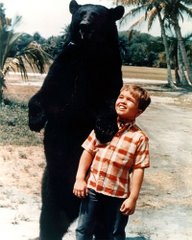
Florida black bear (Ursus americanus floridanus)

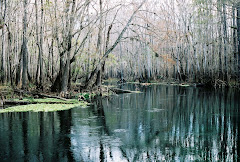
Bottom land swamp forest


Tracking my quarry through the brush


Swamp cub

Monday, March 10, 2008

Kissimmee Prairie Preserve State Park


The Kissimmee Prairie Preserve presents an opportunity to explore the last large chunk of undisturbed Florida dry prairie, an ecosystem that once covered millions of acres across the central part of the Sunshine State. At 54,000 acres this is one of the largest nature preserves in Florida and is well worth the effort to make the journey on rural back roads into the far hinterlands of Okeechobee County.


It looks just like Africa.

In this park you are encouraged to explore on foot, bicycle, horseback or by guided swamp buggy. Private vehicles are forbidden from venturing beyond the beautiful oak draped campground near the entrance to the preserve. With over 100 miles of dirt roads and trails this place is a hikers paradise.

Slough in the middle of surrounding prairie


Egret

The park offers excellent seasonal birding opportunities and is home to the endangered Florida grasshopper sparrow, as well as the crested caracara and sandhill crane. We encountered the largest alligator that I have ever seen in the wild (see photo below) as well as deer and many different species of raptors and aquatic birds. Kissimmee Prairie is also a well known spot for astronomers because it is located in one of the most remote areas of the Florida peninsula with very few urban lights to obscure the dark night sky.


Approaching a thickly wooded hammock


Gigantic leaf-footed bug (Acanthocephala terminalis)

The terrain is characterized by vast open plains dotted with hammocks of palm and oak that is interspersed with shallow waterways and sloughs. The western boundary of the park is the Kissimmee River, which eventually empties into Lake Okeechobee, and links the waters of the Floridian Aquifer in the northern part of the state to the drainage system of the Everglades in the south. The Kissimmee Prairie is an excellent place to experience the subtle transition from swampy forests to grassy open glades which takes place in this part of Florida.

It's located in an extremely remote area so bring plenty of food and supplies before you set out and make sure to stay for at a least a full day to absorb the beauty and majesty of this incomparable landscape that is unique to Florida and a treasure for us all.


A truly monster-sized gator (click on the photo for a better look).


Primordial Florida

Friday, January 18, 2008

Blue Spring State Park


Blue Spring State Park is a 2700 acre preserve centered around a first magnitude spring that discharges 104 million gallons of water daily into the nearby St. Johns River in western Volusia County. During the bulk of the year the park is available for visitors to swim, snorkel and scuba dive in the crystal clear waters that flow for a half mile from the spring to the river. However in the winter months all human focused activities are shut down and these pristine depths are given over to migrating West Indian manatees that use this stream to swim, rest and play.

Along the stream flowing from Blue Spring

The warm 72 degree waters of Blue Spring provide a vital refuge for these mammals when the water temperature in their coastal inlet habitat becomes too cold for them to survive in. A manatee cannot withstand temperatures much below 66 degrees, so these warm water springs make it possible for them to inhabit this part of central Florida.


Manatee in the stream


Closeup in the shallows


Crystal clear depths near the spring


Scratching an itch on a log

A scenic boardwalk trail parallels the entire length of the stream flowing from the spring, affording many vista points from which to view these gentle and fascinating creatures.


Boardwalk trail


Blue Spring

The park is located 2.5 miles west of Orange City off U.S. Hwy. 17/92. Binoculars sure come in handy.

Monday, November 26, 2007

Hidden Osceola County

Osceola is the sixth largest county in Florida with over 1,350 square miles of territory. From north to south it stretches almost 60 miles and is for the most part uninhabited. The extreme northern part of the county is where the bulk of its 245,000 citizens reside, including us. This narrow corridor of densely populated suburbia, roughly paralleling U.S. Hwy. 192, comprises the southern edge of metropolitan Orlando. Osceola is also the 17th fastest growing county in the U.S. by attracting 100,000 new residents since the late 1990's.

Blessedly the rest of the county is still predominantly woods, swamps, lakes, prairies and vast ranches; with much of the agricultural land being devoted to cattle, citrus and turf farms. A lot of it is also preserved by the state of Florida as conservation and wildlife management land that is easy to access and enjoy.

This past Sunday we left the hurly-burly of U.S. 192 behind us and turned south on County Hwy. 523 heading for Yeehaw Junction to enjoy the wide open spaces and beautifully diverse landscapes of southeastern Osceola County that few of our neighbors even know of, much less have ever desired to visit.

Our first stop was at the Sunset Ranch trailhead located in the gorgeous Three Lakes Wildlife Management Area. This stunningly beautiful loop trail takes you through enormous open groves of live oak draped with overhanging Spanish moss, dense cypress swamps, open Florida prairie and eventually leads to the shores of Lake Marian. It was easily one the most impressive nature trails I've ever hiked in Florida.
Enchanted forest


Giant cypress


Tall grass prairie


Lake Marian

Hwy. 523 terminates at U.S. 441 in the drowsy half-dead community of Kenansville where we hung a right and proceeded south another 20 miles to Yeehaw Junction where there is an entry ramp on to the Florida Turnpike for the trip back home.

This part of Osceola County still retains its rural charm and has many areas of unspoiled wilderness. This is a very good time of the year to get out and hike, the temperatures are moderate but still warm, the bugs much less of an obstacle to maintaining your sanity and scary reptilian creatures like snakes and gators are more subdued in the cooler weather.

Go forth and explore. It's what the world is for.


Kenansville, FL

Hostess stand in the Desert Inn
Yeehaw Junction, FL


Dining room and bar
Desert Inn


Window up above
Desert Inn

"How I wish I could be dreaming
And wake up to an honest love
I was wrong for I was watching
From the window up above."

------George Jones

Monday, November 19, 2007

The island behind our house

One of my favorite places in all of Florida just happens to be located directly behind our house here in Celebration. It is a slightly elevated patch of open prairie dotted with pine, palmetto and live oak which is completely surrounded on all sides by thickly wooded swamps. The only access to this "island" is by a trail that starts behind our garage.

Trail to the island

In fact this little known nature preserve is where the Disney Corporation relocates animals, especially the endangered gopher tortoise, when they develop new areas of their property that ends up displacing the local fauna. Every once in a while a Disney truck will pull up near our house and a crew of workers will head back into the swamp towards the island to do some sort of conservation work. Lately they've been grooming the prairie with a tractor to enhance the habitat for turtles. Other than these occasional visits from the conservation crew no one else even knows this place exists (besides Connie and I). It is our own private tropical paradise where we can readily see all kinds of wildlife and experience the peace and serenity of an untouched tract of primordial Florida.


The island


An ancient giant live oak


A beautiful tropical spider (Gasteracantha)

The funny thing is we can't get any of our neighborhood friends to join us on a "hike around the island" as we like to call it. They seem deathly afraid of venturing back into the murky depths of the unknown. I think they prefer their version of Florida to be throughly scraped clean of native vegetation, sprayed for bugs and covered in neat squares of uniform green fescue. Welcome to their Magic Kingdom. I certainly prefer mine.


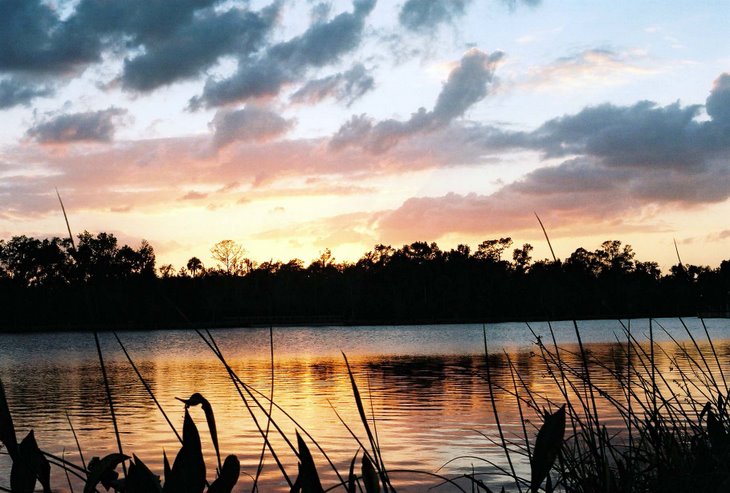
Sunset deep in the swamp


Good-night all.

Tuesday, November 13, 2007

Catfish Creek State Preserve


This past Sunday we took a delightful hike in Catfish Creek State Preserve which is located in an isolated area of the Lake Wales Ridge ecosystem of central Florida. This unusual landscape of sand hills and desert-like flora reminded me of the high plateaus of Utah and Arizona. It was so quiet and still that I thought for a moment that we were actually in a remote section of the southwestern U.S. rather than in the 4th most populous state in the nation. Amazingly, we were the only people there on this particular afternoon.

Catfish Creek is a wonderful off-the-beaten-path sort of place located in eastern Polk County that preserves beautiful sections of scrub, sandhill, pine flatwoods and shallow ponds that are home to numerous rare plants such as scrub morning glory, scrub plum, pygmy fringe tree, and cutthroat grass. It is also home to several protected animal species including Florida scrub-jays, bald eagles, gopher tortoises, and Florida scrub lizards. During our brief visit we encountered deer, turkey, assorted waterfowl, swallows, an eagle, scrub-jay and a wide variety of insects.


Isolated and empty road to the park.


Interior backcountry of the preserve


A very busy sand wasp (see the sand flying out behind the abdomen).

Pond


Fall wildflowers

The Lake Wales Ridge ecosystem is a rapidly vanishing Florida landscape that is home to many unique species of flora and fauna. This relatively untouched state park showcases one of the more remote and sublime landscapes you're liable to find on the entire Florida peninsula.

If you don't end up getting terribly lost trying to find the place you'll probably have the whole park to yourself once you arrive. Have fun kids! Send us a postcard.